Arabic Punctuation: Every Mark, and How to Type It
Three Arabic punctuation marks were mirrored when the script met the printing press. Four were not. Knowing which is which is most of the difference between Arabic that looks edited and Arabic that looks typed on an English keyboard.

Why Arabic punctuation looks mirrored
Arabic runs right to left, and the marks that lean — the comma, the semicolon, the question mark — were flipped so that they lean into the text rather than away from it. A Latin comma opens towards the left because that is where the sentence continues. An Arabic comma opens towards the right for the same reason.
This is the whole logic of Arabic punctuation in one sentence, and it splits every mark into two groups:
- Asymmetrical marks were redrawn — the comma, the semicolon and the question mark, each with its own new Unicode character.
- Symmetrical marks were adopted unchanged — the full stop, the colon, the exclamation mark and the ellipsis had nothing to flip.
Arabic punctuation marks are separate Unicode characters, not rotated glyphs
The Arabic comma is not a Latin comma displayed backwards. It is U+060C, its own character with its own code point, and a font renders it directly. This matters in practice: copying a Latin comma into Arabic text does not produce Arabic punctuation, it produces a Latin comma sitting in an Arabic sentence, and readers notice.
The Arabic comma
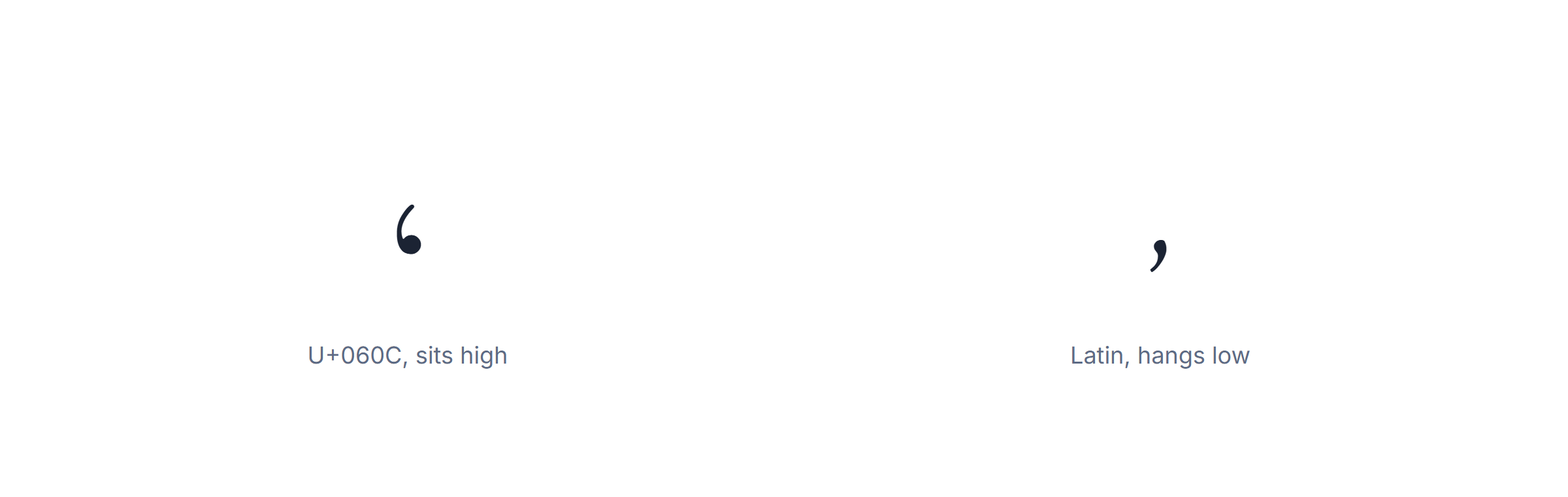
The comma is the most-used piece of Arabic punctuation and the one most often typed wrong. Character: U+060C, ARABIC COMMA. It looks like a Latin comma rotated a half-turn, sitting high rather than on the baseline.
It does exactly what a Latin comma does:
- separates items in a list;
- marks off a subordinate clause;
- follows an introductory phrase;
- separates a name from what follows it.
The one difference worth knowing is that Arabic writing tolerates far longer sentences than English does, so a well-punctuated Arabic paragraph often carries more commas per full stop than an English one.
The Arabic punctuation mistake almost everyone makes
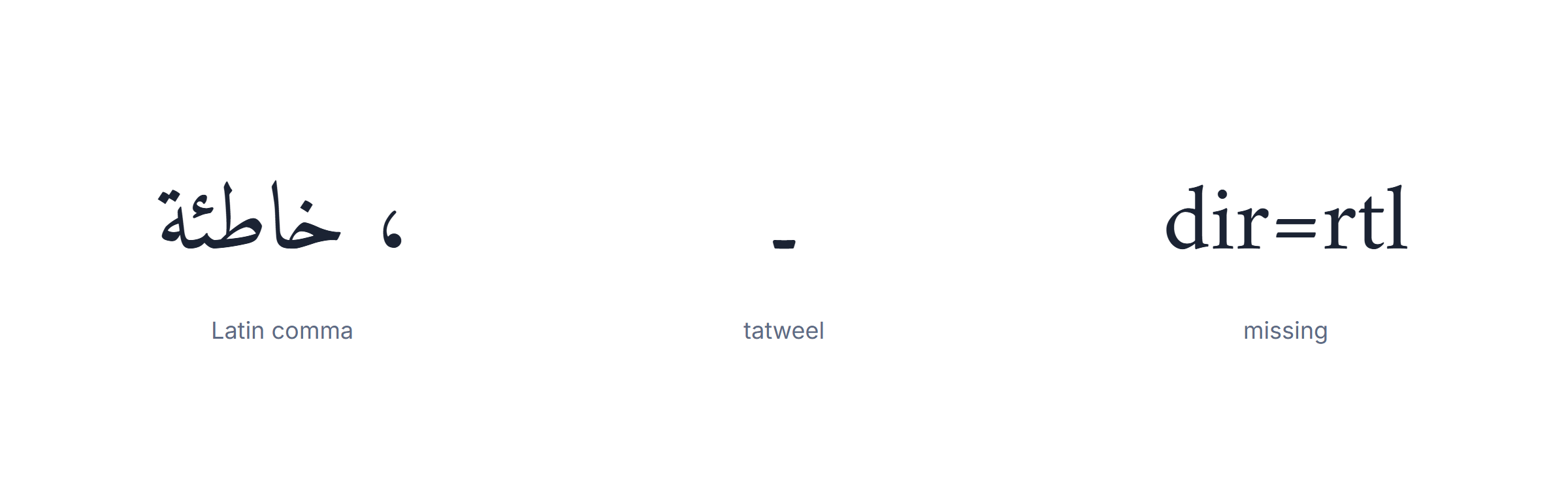
Typing a Latin comma because it is on the keyboard. In a proportional font the difference is immediately visible — the Latin comma hangs below the line, the Arabic one sits above it — and in justified text the spacing goes wrong. Of all Arabic punctuation errors this is the most common and the easiest to fix.
The Arabic semicolon
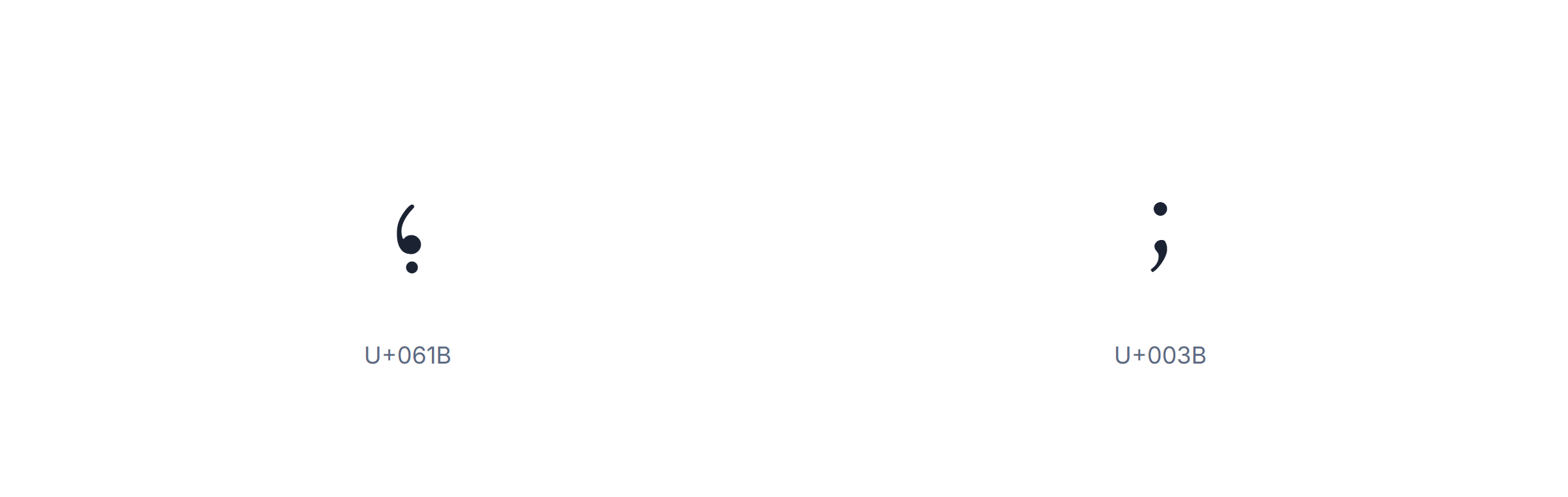
The semicolon is the rarest of the three mirrored Arabic punctuation marks. Character: U+061B, ARABIC SEMICOLON. A full stop with an Arabic comma below it, mirrored like the comma.
It joins two independent clauses that belong together, exactly as in English. In practice it is rare, and where you meet it says something about the text:
- Legal and administrative Arabic — common, and used precisely.
- Academic Arabic — common, often translated in from English.
- Newspaper Arabic — rare; a comma or wa does the job.
- Online Arabic — essentially absent.
Its presence is a fair signal that the text was edited carefully.
The Arabic question mark
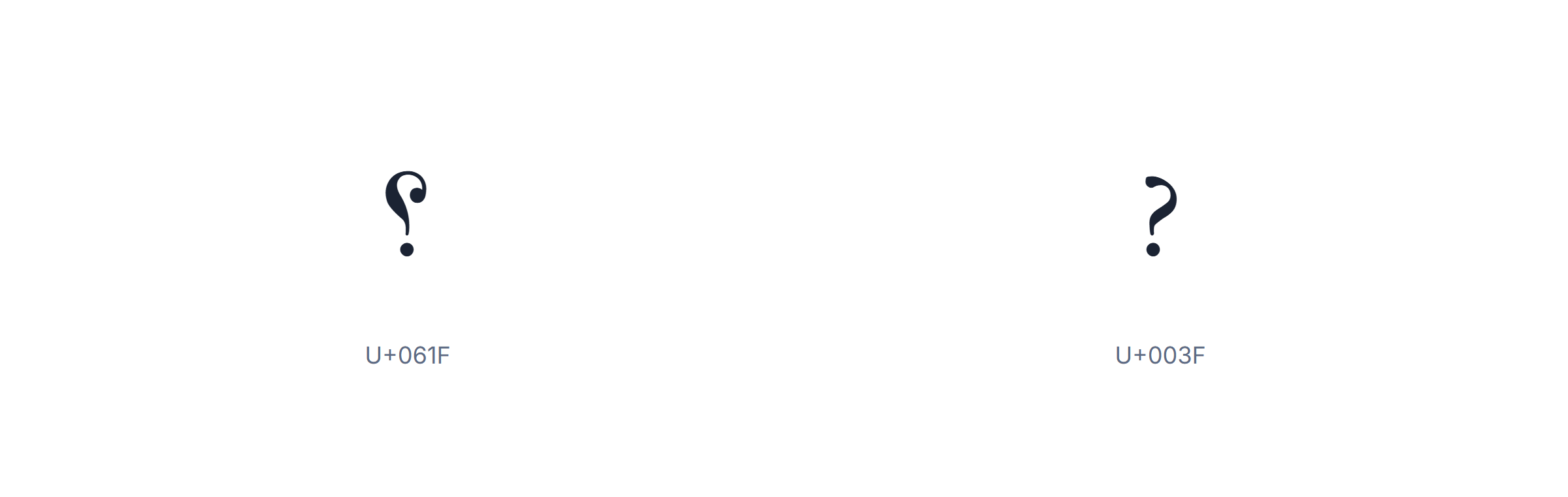
This is the piece of Arabic punctuation everyone recognises. Character: U+061F, ARABIC QUESTION MARK. A mirrored question mark, hooking to the left instead of the right.
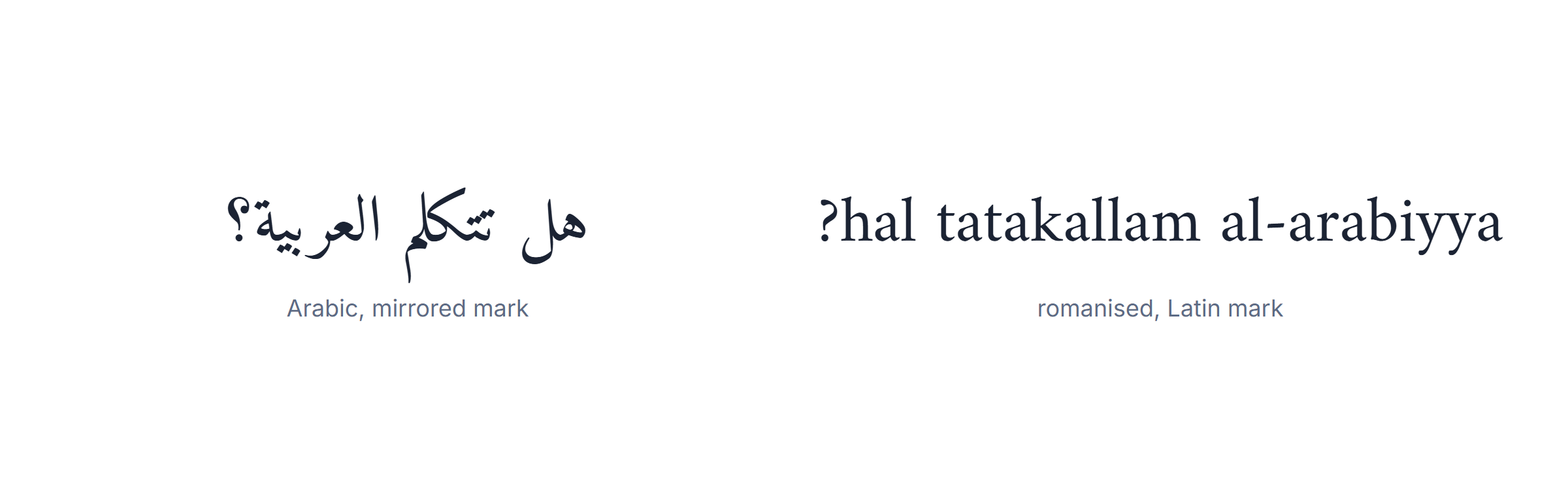
This is the most recognisable piece of Arabic punctuation and the one most often rendered wrong by software, because a Latin question mark placed at the end of an Arabic line will frequently jump to the wrong end of the line entirely. That is not a font problem and not a punctuation problem — it is the bidirectional algorithm, and it is covered below.
Arabic punctuation has no inverted opening mark
Arabic does not use a Spanish-style opening question mark. The mark appears once, at the end of the question, which in a right-to-left line means at the far left. Three consequences:
- A reader cannot tell a written sentence is a question until the end.
- Which is part of why the particle hal exists, doing the job at the front.
- And why a missing question mark in Arabic is a real loss of information, not a stylistic slip.
The full stop, which was never mirrored
Character: U+002E, the ordinary Latin full stop.
Not every piece of Arabic punctuation needed a new character. Arabic has no separate full stop. The dot is symmetrical, so there was nothing to mirror and no new character was ever encoded. Stated plainly, you use the standard Latin characters for all of these:
- the full stop, U+002E;
- the colon, U+003A;
- the exclamation mark, U+0021;
- the ellipsis, U+2026;
- the hyphen and the em dash.
| Mark | Arabic form | Unicode | Mirrored? |
|---|---|---|---|
| Comma | ، | U+060C | Yes |
| Semicolon | ؛ | U+061B | Yes |
| Question mark | ؟ | U+061F | Yes |
| Full stop | . | U+002E | No |
| Colon | : | U+003A | No |
| Exclamation mark | ! | U+0021 | No |
| Ellipsis | … | U+2026 | No |
| Percent sign | ٪ | U+066A | Separate character |
| Decimal separator | ٫ | U+066B | Separate character |
| Thousands separator | ٬ | U+066C | Separate character |
| Date separator | ٭ | U+066D | Separate character |
Brackets and quotation marks in a right-to-left line
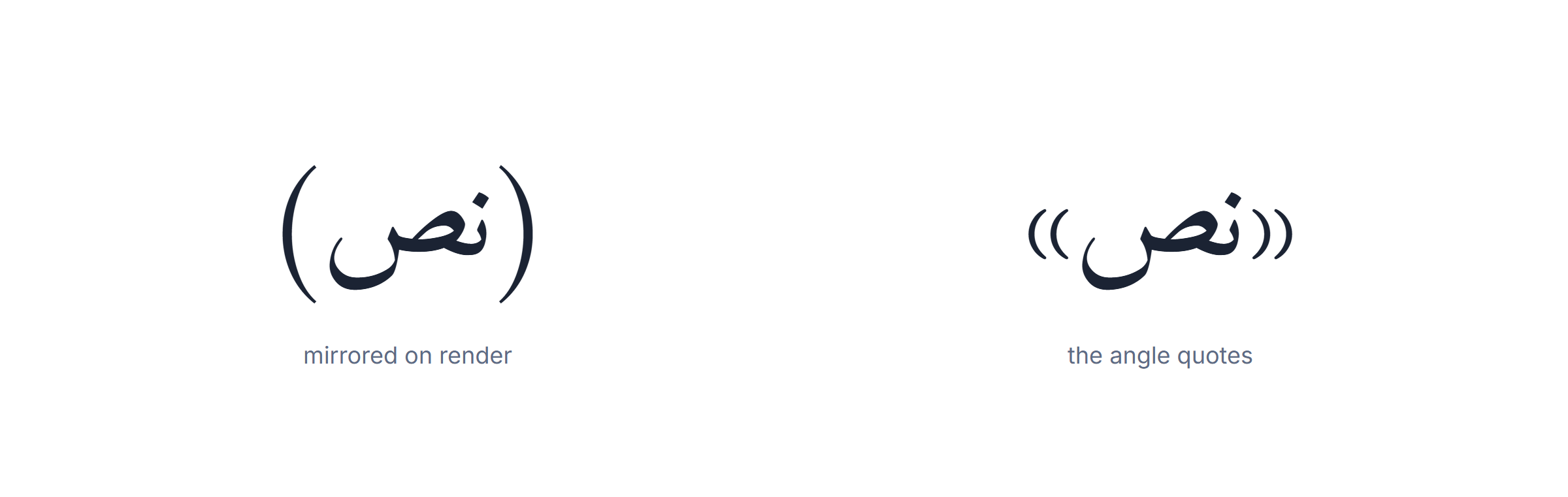
Bracketing is where Arabic punctuation stops being about characters and starts being about rendering. Brackets are not separate Arabic punctuation characters — you use the ordinary ones — but they are mirrored at display time by the bidirectional algorithm. Type an opening parenthesis in an Arabic sentence and it will be drawn as the shape that opens towards the right. The stored character does not change; the rendering does.
The rule that follows is short:
- Type the opening bracket first and the closing bracket second, in the order you say them.
- Let the renderer decide which shape to draw.
- Never compensate by typing them backwards — that looks right in one application and wrong in every other.
Quotation marks in Arabic punctuation
Arabic normally uses the angle quotes « », inherited from French through Levantine and North African printing, rather than the curly English pair. In practice you will see three conventions:
- « » — the edited-prose standard across the Arab world.
- Straight double quotes — dominant online, not wrong, simply less formal.
- Curly English quotes — a translation artefact; they point the wrong way in an RTL line.
The ornate parentheses, and other marks you will meet once
The long tail of Arabic punctuation is short but worth recognising. A few characters exist in Unicode that most people never type but will certainly read.
- Ornate left and right parenthesis (U+FD3E, U+FD3F) — the decorative brackets placed around Quranic verses in print.
- Arabic tatweel (U+0640) — not punctuation at all, but the elongation character used to stretch a joining stroke for justification. Frequently mistaken for a dash.
- Arabic end of ayah (U+06DD) — the circled verse marker.
- Arabic full stop (U+06D4) — exists, is used in Urdu and Persian rather than Arabic, and is worth recognising because it turns up in text copied from those languages.
Those four cover essentially every unusual mark you will encounter in Arabic punctuation outside a specialist typesetting context. Two more are worth recognising if you handle religious text:
- U+FDFD, the basmala, one character holding an entire formula.
- U+FDFA, the blessing on the Prophet, likewise.
Numbers, decimals and the two separator systems
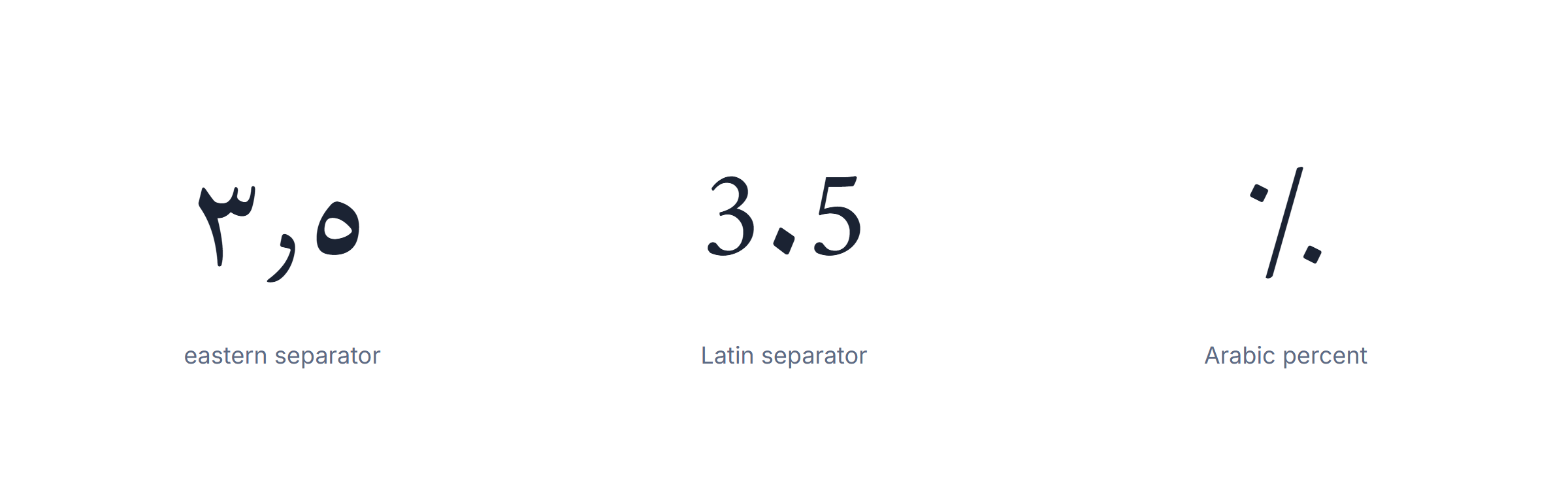
Numbers are the messiest corner of Arabic punctuation. Arabic punctuation around numbers is where two conventions collide. Eastern Arabic numerals use their own decimal and thousands separators — U+066B and U+066C — while Western numerals in Arabic text usually take the Latin comma and full stop.
The result is that 1,5 in an Arabic document may mean one and a half or one thousand five hundred depending on which convention the writer followed, and neither is wrong. Two rules remove the ambiguity:
- Match the separator to the digits. Eastern separators with eastern digits, Latin separators with Latin digits.
- Never mix systems inside one document. Readers in the Maghreb and the Gulf will each read a mixed document as an error.
The percent sign has its own character
U+066A, the Arabic percent sign, is drawn with the small circles set differently from the Latin one. It is genuinely part of Arabic punctuation and genuinely rare online, where the Latin sign dominates.
Arabic punctuation is a modern import
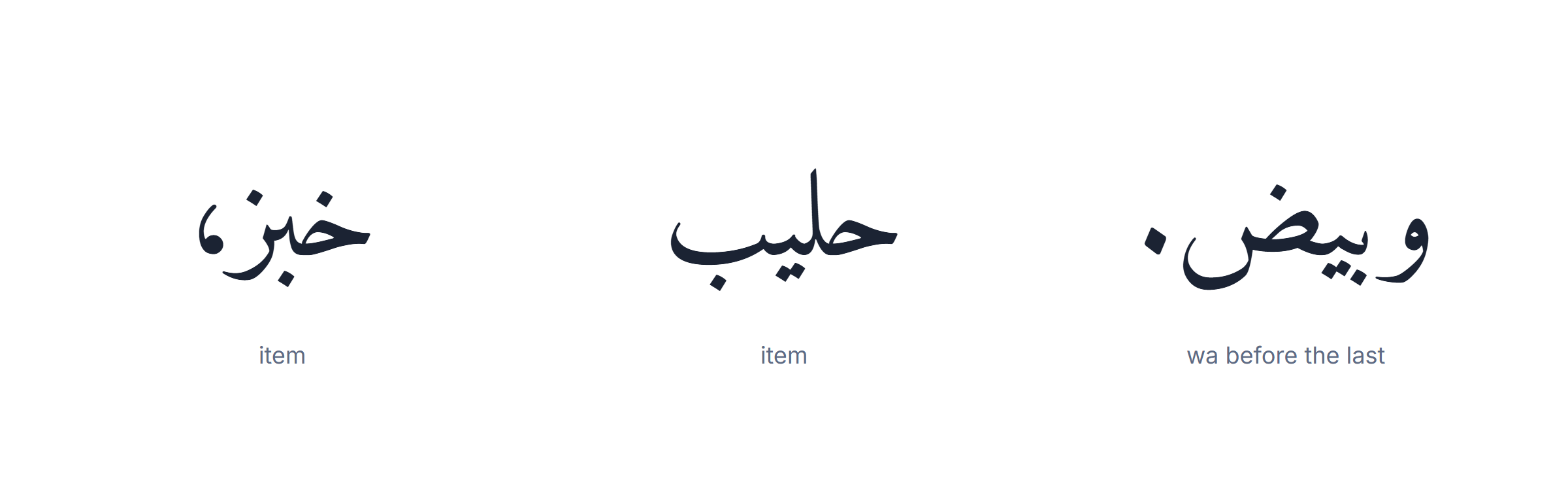
Arabic punctuation is younger than most people assume. Classical Arabic had almost none of this. For most of its history the language was written without marks between sentences: structure was carried by particles — wa, fa, thumma, inna — which told the reader where a clause began and how it related to the last one. A trained reader did not need a comma because the grammar already said what the comma would have said.
The marks arrived in the nineteenth century with the printing press, translation from French and English, and the newspaper. That is why almost all Arabic punctuation is a mirrored Latin mark rather than a native invention, and why usage is still noticeably less standardised than in English: there is no equivalent of a two-century-old style tradition to appeal to.
It also explains a pattern that confuses learners. In much informal Arabic writing online, punctuation is sparse or absent. That is not carelessness so much as an older habit surviving: the particles are still doing the work. The particles that carry the load are a short list:
- wa — and, joining anything to anything.
- fa — and then, marking consequence and sequence.
- thumma — then, after an interval.
- inna — indeed, opening a statement.
- amma … fa — as for X, then Y, marking a topic shift.
- lakin — but, marking contrast.
Why your punctuation jumps to the wrong end of the line
Nothing about Arabic punctuation generates more bug reports than this. This is the single most common Arabic punctuation complaint, and it is almost never a punctuation problem.
Unicode stores text in logical order — the order you say it — and the bidirectional algorithm decides where each character is drawn. Punctuation is direction-neutral: it takes its direction from what surrounds it. A question mark at the end of an Arabic sentence inside a left-to-right paragraph has neutral characters on one side and a paragraph direction pulling the other way, so it is rendered at the wrong end.
The Arabic punctuation fix is one attribute
Set the base direction of the element that holds the text:
<p dir="rtl" lang="ar">هل تتكلم العربية؟</p>Without dir="rtl" the Arabic letters still render correctly and the Arabic
punctuation lands in the wrong place, which is exactly the combination that makes people blame
the font. Changing fonts will never fix it.
Mixed Arabic and English
A sentence with an English brand name inside Arabic will place the surrounding punctuation
unpredictably unless the run is isolated. The clean solution is
<bdi> around the foreign run, or the Unicode isolate characters U+2068 and
U+2069 in plain text.

How to type Arabic punctuation
On an Arabic keyboard layout
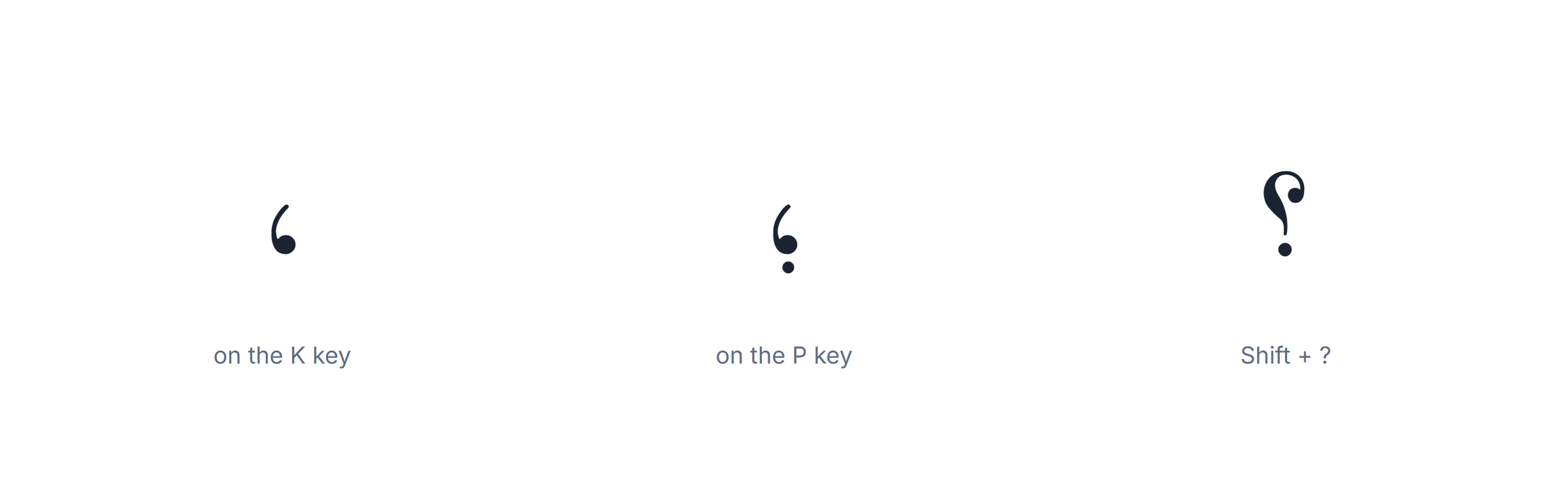
Getting Arabic punctuation onto the page is a layout question before it is a typing one. The three mirrored marks are on the layout, not on the Latin one. On the standard Arabic layout the comma is on the K key position, the semicolon on P and the question mark on ? with Shift. They are not where a Latin layout puts them, which is why people with the layout installed still type the wrong marks.
Typing Arabic punctuation without installing anything
Our online Arabic keyboard has the mirrored marks on the visible keys, so you can click them and copy the result. This is the fastest route when you only need a sentence and do not want a second layout on your machine. The transliteration tool converts Latin typing to Arabic, and harakat handles the short vowels, which are a different thing entirely — see the next section.
Arabic punctuation by Unicode code point
On Windows, hold Alt and type the decimal code on the numeric keypad, or type the hex code and press Alt+X in Word. On macOS use the Character Viewer. On Linux, Ctrl+Shift+U then the hex code. The three you will want are 060C, 061B and 061F.
On a phone
Add the Arabic keyboard in the system language settings and the marks appear on the symbol layer of that keyboard. Switching layouts changes the punctuation available, which is the point people miss when they type Arabic on an English layout.
Arabic punctuation is not the same thing as diacritics
Arabic punctuation and harakat are not the same thing. The two get confused constantly, including by search engines. Punctuation separates sentences and clauses: the comma, the semicolon, the question mark. Diacritics — the harakat — sit on and under letters and tell you which vowel to say: fatha, kasra, damma, sukun, shadda.
They are different in every way that matters. Punctuation is optional in the sense that a sentence is still grammatical without it; diacritics are optional in the sense that a fluent reader supplies them from context. Punctuation was imported in the nineteenth century; diacritics were invented in the seventh to keep Quranic recitation exact. If you came here looking for the marks on the letters rather than between them, our guide to Arabic harakat covers those, and Arabic alphabet pronunciation covers the letters underneath.
The dash, the hyphen and the character that is neither
Two of the marks people expect to be special Arabic punctuation are not. Arabic uses the ordinary hyphen and the ordinary em dash, both unmirrored, and neither has an Arabic-specific code point. In practice the em dash is far less common than in English: where an English writer would use a pair of dashes for an aside, Arabic prose usually uses commas or a relative clause.
Tatweel is not Arabic punctuation and not a dash
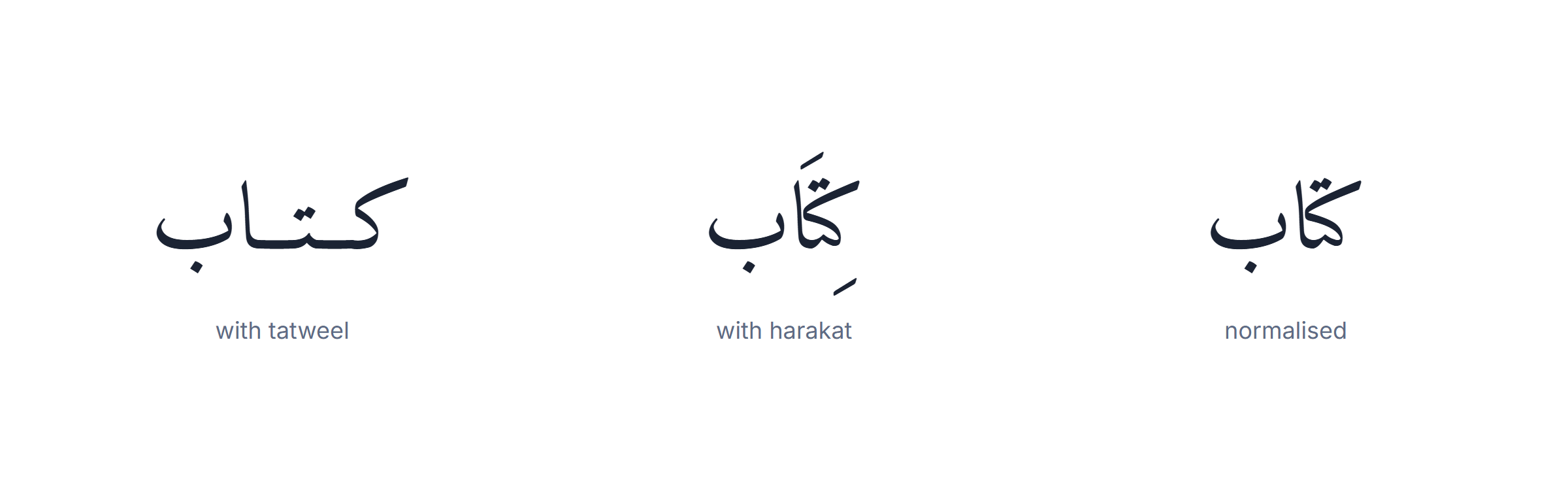
The character that causes trouble here is tatweel, U+0640, also called kashida. It is a connecting stroke used to stretch a word for justification or emphasis — ك ــ ت ــ ب — and it looks like a short dash to an eye trained on Latin. It is not punctuation, it carries no meaning, it should never be used as a hyphen, and search engines index a word containing it as a different word. Of all the Arabic punctuation confusions this is the one that quietly damages text.
Punctuation in lists, headings and titles
Lists
Arabic punctuation inside a list follows English logic with mirrored marks. Arabic list conventions follow the same logic as English but with the mirrored marks: items separated by the Arabic comma, the last two joined by wa rather than a comma, and the whole list closed with a full stop. Numbered lists use the Arabic dash or a full stop after the numeral, and the numerals themselves may be eastern or western depending on house style.
Headings
Arabic headings normally take no terminal punctuation at all — no full stop, no colon. A heading that ends in a colon is a strong sign the text was translated from English without being edited.
Titles of works
Book, film and article titles take the angle quotes « » rather than italics, because Arabic has no italic. This is one of the places where Arabic punctuation is doing a job that Latin typography hands to a font style instead.
House styles differ more than in English
Arabic punctuation is less standardised than English punctuation, and the gap is visible. English punctuation has been standardised for two centuries by style guides that broadly agree. Arabic punctuation has not, because it arrived recently and no single authority took charge. The differences are real and visible.
| Question | Newspaper practice | Academic practice | Online practice |
|---|---|---|---|
| Quotation marks | « » | « » | Straight ” “ |
| Comma | Arabic U+060C | Arabic U+060C | Often Latin |
| Numerals | Eastern or western by region | Usually western | Usually western |
| Semicolon | Rare | Common | Almost never |
| Sentence length | Long, comma-heavy | Long | Short |
The regional split on numerals is the sharpest: Egypt and the Gulf lean eastern, the Maghreb uses western digits almost exclusively, and a document mixing both looks careless to readers in either place.
Persian and Urdu use the same script and different marks
Arabic punctuation is not the only punctuation used with the Arabic script. Arabic script is used by several languages that made different punctuation choices, and text copied between them carries the difference along.
- Persian uses the Arabic comma and question mark but adds its own characters for some letters, and its full stop is the Latin one.
- Urdu uses U+06D4, the Arabic full stop, which is a raised short stroke rather than a dot — the clearest single difference between an Urdu and an Arabic page.
- Both use eastern numerals with locally different digit shapes for four, five and six.
If a passage of Arabic punctuation looks subtly wrong and you cannot say why, checking whether the text was copied from a Persian or Urdu source resolves it surprisingly often.

Three sentences, punctuated
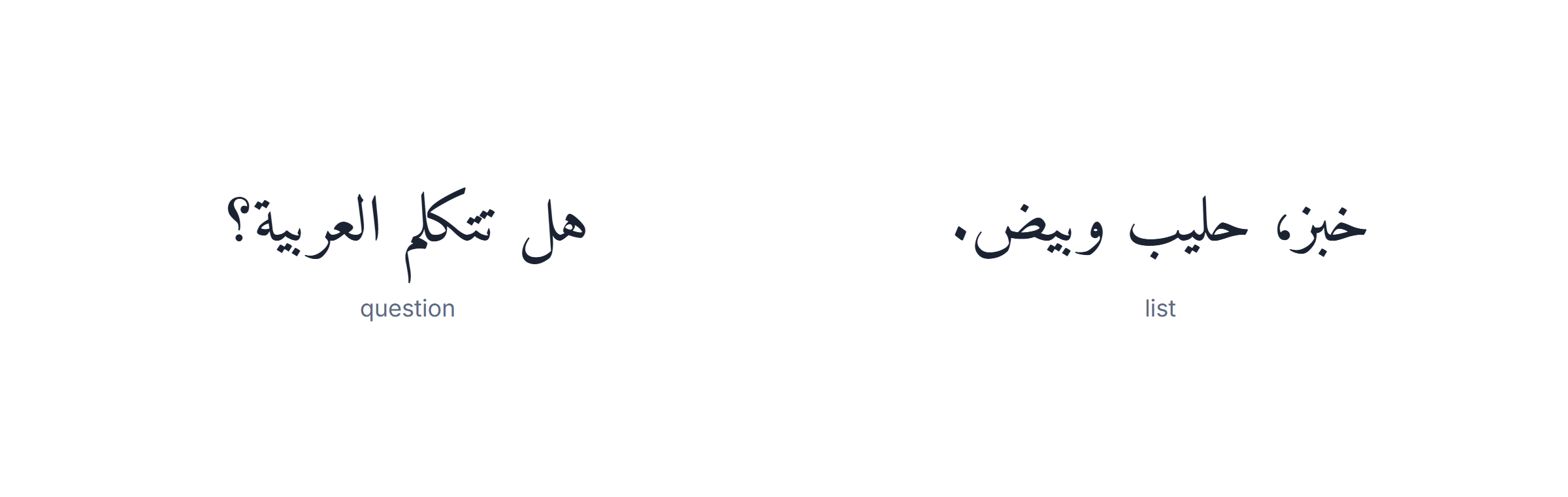
Arabic punctuation is easier to see applied than described. The rules are easier to see applied than described. Each of these uses the Arabic punctuation characters in the positions a careful editor would put them.
| English | Marks used | Where they go |
|---|---|---|
| Do you speak Arabic? | U+061F | At the left end of the line |
| I bought bread, milk and eggs. | U+060C, then wa, then U+002E | Comma between the first two only |
| He arrived late; the meeting had ended. | U+061B, then U+002E | Semicolon between the clauses |
| The price is 3.5%. | U+066B, U+066A | Decimal separator, then Arabic percent |
| He said: «I will not go». | Colon, angle quotes | Colon unmirrored, quotes mirrored by the renderer |
Two details repeat across all five. The terminal mark always sits at the left end of a right-to-left line, which looks wrong until it does not. And the marks that were never mirrored — the full stop, the colon — behave exactly as they do in English.
There is no capitalisation, and what does its job instead
Arabic has one case. There are no capital letters, so every job English gives to capitalisation has to be done by something else — and most of that load falls on Arabic punctuation.
| What English uses capitals for | What Arabic uses |
|---|---|
| Marking a sentence start | The full stop before it, and nothing else |
| Proper names | Context, or the ornate brackets in careful print |
| Titles of works | The angle quotes « » |
| Emphasis | Bold, underlining, or the word inna |
| Acronyms | Written out in full, or transliterated |
Why this makes punctuation matter more, not less
In English you can strip out every comma and still find the sentence boundaries, because the capitals mark them. In Arabic you cannot. That is the argument for using Arabic punctuation carefully even though the language survived thirteen centuries without it: the redundancy that lets an English reader recover from bad punctuation does not exist here.
Dates, times, addresses and phone numbers
Numeric formats are the second place where Arabic punctuation meets bidirectional layout, and they break in predictable ways.
| Item | Convention | Separator | Trap |
|---|---|---|---|
| Date | Day / month / year | U+066D or / | Renders left-to-right inside RTL text |
| Time | Hour : minute | Colon, unmirrored | None |
| Phone number | Grouped digits | Space or hyphen | A leading + can jump ends |
| Address | Street, city, country | Arabic comma | Building numbers reorder |
| Range | From-to | En dash | Reads reversed unless isolated |
Numbers always run left to right
This is not a bug and cannot be turned off. Digits are a left-to-right run inside a right-to-left line, always, in every language that uses the Arabic script. A date written 15/08/2026 stays in that order; only its position on the line is decided by the base direction. Most complaints about Arabic punctuation and numbers dissolve once this is understood.
Three habits that prevent the mess
- Wrap any number-plus-symbol run in
<bdi>if it sits next to Arabic text. - Never hard-code a direction mark into stored data; set it at display time.
- Prefer the ISO date form in anything a machine will parse, and format for display separately.

Abbreviations, acronyms and the missing full stop
English marks abbreviations with a full stop — etc., Dr., i.e. Arabic largely does not, and this is one of the places where Arabic punctuation simply has no equivalent rule.
- Titles are written out. ad-duktur, not an abbreviation.
- Organisational acronyms are spelled as words where they have entered the language — naza for NASA — or written in Latin letters unchanged.
- Academic shorthand is borrowed whole. etc. and e.g. appear in Latin script inside Arabic academic text rather than being calqued.
- Quranic and honorific formulae get their own characters, not abbreviations: U+FDFA for the blessing on the Prophet, U+FDFD for the basmala.
The practical consequences for anyone editing Arabic:
- A full stop in the middle of a word is almost always a translation artefact.
- An abbreviation that looks Arabic but is punctuated like English usually is English.
- The honorific characters are single code points; never rebuild them from letters.
Why punctuation breaks search and sorting
Arabic punctuation causes two problems that only surface once text goes into a database.
Tatweel poisons a search index
A word stretched with U+0640 is a different byte sequence from the same word unstretched, so it will not match. Any Arabic search box needs to strip tatweel before indexing and before querying. This is the single highest-value normalisation step for Arabic text and it is one line of code.
Diacritics do the same thing
Harakat are separate combining characters. A vowelled word and an unvowelled word are different strings. Strip U+064B to U+0652 as well as tatweel, and match rates jump.
The full normalisation list, in order
- Strip tatweel, U+0640.
- Strip harakat, U+064B to U+0652.
- Normalise the alif forms — U+0622, U+0623, U+0625 all to U+0627.
- Normalise ta marbuta U+0629 to ha U+0647, or leave it, but be consistent.
- Normalise alif maqsura U+0649 to ya U+064A.
- Normalise the Arabic punctuation itself only if you are matching, never if you are storing.
That last line matters. Normalising Arabic punctuation for display destroys information; normalising it for the search index does not. The same split applies elsewhere:
- Index: normalise aggressively.
- Store: never normalise; keep exactly what the writer typed.
- Display: render what is stored, with the correct direction.
- Compare: normalise both sides identically, or the comparison is meaningless.
A proofreading checklist for Arabic punctuation
Run these seven checks over any Arabic text before it goes out. Each takes seconds and each catches a class of error that readers notice.
- Search for the Latin comma. Every hit inside Arabic text is wrong.
- Search for the Latin question mark. Same.
- Search for U+0640. Tatweel used as a dash or left over from a paste.
- Check every terminal mark sits at the left end of its line on screen.
- Check number separators are consistent with the digits used.
- Check headings carry no terminal punctuation.
- Check quotation marks are the angle pair if the rest of the document uses them.
The two checks worth automating
- A regular expression for a Latin comma or question mark adjacent to an Arabic letter finds almost every misplaced mark in one pass.
- A check that every
<p>containing Arabic carriesdir="rtl"finds every bidi failure before a reader does.
Spacing: the rule nobody writes down
Arabic punctuation takes the same spacing as English, and getting it wrong is the second most visible error after using the Latin comma.
| Mark | Space before | Space after | Common error |
|---|---|---|---|
| Comma ، | No | Yes | A space before it, copied from French |
| Semicolon ؛ | No | Yes | Same |
| Question mark ؟ | No | Yes | Same |
| Full stop | No | Yes | Two spaces after, a typewriter habit |
| Colon | No | Yes | A space before it, from French |
| Opening bracket | Yes | No | Space inside the bracket |
| Closing bracket | No | Yes | Same |
| Angle quotes | Outside yes, inside no | Outside yes, inside no | French spacing inside them |
Why French spacing keeps appearing
French puts a thin space before the colon, semicolon, question mark and exclamation mark. A great deal of Arabic publishing in the Levant and the Maghreb grew out of French practice, so the habit crossed over. It is not the Arabic convention, and in justified text it opens visible gaps before every mark. If you inherited a document with spaces before its Arabic punctuation, that is where they came from.
Line breaking: where a mark may not go
Three rules govern where Arabic punctuation may fall relative to a line break, and all three are handled automatically by a correct renderer and broken by a naive one.
- A terminal mark never starts a line. The comma, semicolon, question mark and full stop stay with the word before them.
- An opening bracket never ends a line. It stays with what it opens.
- A number and its unit should not be split. Use a non-breaking space.
What actually breaks this
- Terminal emulators — they break by column, not by rule, so marks land anywhere.
- PDF generators without a line-breaking implementation — the most common cause of a stray Arabic comma at the start of a line in an exported document.
- Manual line breaks in a spreadsheet cell — the writer breaks the line, so no rule applies.
None of these is fixable by choosing different Arabic punctuation. All three are fixable by using a renderer that implements the Unicode line-breaking algorithm.
Punctuation when you romanise Arabic
Transliterated Arabic is written left to right in Latin letters, so it takes Latin punctuation throughout. Using Arabic punctuation marks in a romanised line is a common and slightly odd-looking error.
- Use the Latin comma, semicolon and question mark. The line is left to right; the mirrored forms would lean the wrong way.
- Keep the apostrophe distinct. In ALA-LC the right half-ring marks ayn and the left half-ring marks hamza. A straight typewriter apostrophe collapses the two.
- Hyphenate the article. al-kitab, not alkitab, and assimilate before sun letters — ash-shams.
- Do not carry the tatweel across. It has no romanised form at all.
Mixed lines are the hard case
A sentence that quotes Arabic script inside a romanised English line has two directions and
therefore two punctuation systems in play. The rule that works: the punctuation belongs to
the sentence, not to the quotation. An English sentence quoting an Arabic phrase takes
Latin punctuation, even though the quoted phrase is Arabic. Wrap the Arabic run in
<bdi> and the marks stay where they belong.
Every mark, one by one
The complete inventory. Most guides to Arabic punctuation stop at three characters; this is everything you will meet in real text, including the ones that are not punctuation at all but are constantly mistaken for it.
The three mirrored marks
- ، U+060C, Arabic comma. Sits high on the line rather than hanging below it. Separates list items and clauses. The most-used and most-mistyped piece of Arabic punctuation there is.
- ؛ U+061B, Arabic semicolon. A dot above an Arabic comma. Joins two independent clauses. Rare outside legal and academic prose.
- ؟ U+061F, Arabic question mark. Hooks left instead of right. Appears once, at the end, which on a right-to-left line means the far left.
The marks Arabic borrowed unchanged
- . U+002E, full stop. Symmetrical, so never mirrored. Arabic has no separate character for it.
- : U+003A, colon. Introduces quotations and lists exactly as in English.
- ! U+0021, exclamation mark. Used more sparingly than in English.
- … U+2026, ellipsis. One character, not three dots — the single character is what a typesetter expects.
- Hyphen and em dash. No Arabic-specific code points exist. The em dash is far less common in Arabic prose than in English.
The number marks
- ٪ U+066A, Arabic percent sign. Drawn with its circles set differently from the Latin one. Genuinely part of Arabic punctuation and genuinely rare online.
- ٫ U+066B, decimal separator. For use with eastern digits.
- ٬ U+066C, thousands separator. Likewise.
- ٭ U+066D, five-pointed star. Used as a date separator and as an ornament.
The religious and ornamental characters
- U+FD3E and U+FD3F, ornate parentheses. The decorative brackets placed around Quranic verses in print.
- U+06DD, end of ayah. The circled verse marker.
- U+FDFD, basmala. One character holding the entire opening formula.
- U+FDFA, the blessing on the Prophet. Likewise, a whole formula in one code point.
The characters that are NOT punctuation but look like it
- U+0640, tatweel. A stretching stroke. Carries no meaning, breaks search, and is mistaken for a dash daily.
- U+0629, ta marbuta. The feminine ending. Its two dots make text-processing code treat it as a mark.
- U+064B to U+0652, the harakat. Vowel diacritics, not punctuation. Different job, different century, different guide.
- U+06D4. A real full stop, but the Urdu and Persian convention. In Arabic text it is a sign the passage was copied from elsewhere.
Editing somebody else’s Arabic
Most people meet Arabic punctuation not while writing but while checking a translation, a supplier’s copy or a colleague’s document. That job is narrower than proofreading and can be done without reading Arabic fluently.
What you can check without speaking Arabic
- Are the commas the Arabic ones? Search the document for U+002C. Any hit between two Arabic words is wrong.
- Are the question marks mirrored? Same search for U+003F.
- Do terminal marks sit at the left end of the line? Visible at a glance.
- Is there tatweel? Search U+0640. In body text it is almost always a leftover.
- Do headings end in punctuation? They should not.
- Are the digits consistent? One system per document.
- Do brackets face inward? Outward-facing brackets mean somebody typed them backwards to compensate for a rendering bug.
What you cannot check without Arabic
Whether a comma belongs where it is. Arabic tolerates far longer sentences than English, so a paragraph that would be over-punctuated in English can be perfectly correct here. Do not adjust comma density in a language you do not read.
The one instruction worth giving a translator
Ask for the three mirrored characters explicitly. Most Arabic punctuation errors in translated copy are not decisions — they are the translator working on a keyboard that made the Latin mark easier to reach.
Arabic punctuation for developers
Four things break in software, in roughly this order of frequency.
1. Search does not match
Normalise before indexing and before querying, with the same function on both sides: strip tatweel U+0640, strip the harakat U+064B to U+0652, fold the three alif forms U+0622, U+0623 and U+0625 to plain alif U+0627, and fold alif maqsura U+0649 to ya U+064A. Leave the Arabic punctuation itself untouched in stored text and normalise it only in the index.
2. Punctuation renders at the wrong end
Set the base direction on the container, not on the string. In HTML that is
dir="rtl"; in a native application it is the layout direction; in a terminal
emulator it is usually not supported at all and there is no fix.
3. Mixed runs drag their punctuation
Wrap any foreign-script run in <bdi>, or bracket it with the Unicode
isolates U+2068 and U+2069 in plain text. Never insert RLM or LRM by hand into stored content:
they survive edits and accumulate until nobody can tell which are load-bearing.
4. Validation rejects valid input
A regular expression written for Latin text will reject the Arabic comma, semicolon and question mark. Any input validator that allows punctuation has to include U+060C, U+061B and U+061F explicitly, or Arabic users cannot submit an ordinary sentence.
One test string worth keeping
A single line that exercises every failure mode at once: an Arabic sentence ending in a question mark, a Latin brand name in the middle, a number in eastern digits, and one fully vowelled word. If that renders correctly, the pipeline handles Arabic punctuation.
Teaching Arabic punctuation
It is taught late, briefly and inconsistently in most Arabic curricula, which is why educated native writers disagree about it more than educated English writers disagree about theirs.
The order that works
- The comma first, because it is most of the usage and the error is visible.
- The question mark second, together with the particle hal, so the learner sees the mark and the grammar doing the same job.
- The full stop third, with the point that it was never mirrored — this is where the mirroring logic finally makes sense.
- The semicolon last, or never, for anyone not writing formal prose.
The two exercises that transfer
- Punctuate an unpunctuated paragraph. Classical Arabic ran without marks, so this is a real historical exercise rather than an invented one.
- Correct a paragraph punctuated with Latin marks. This is the error the learner will actually go on making for the rest of their life.
What not to teach early
The ornate parentheses, the number separators and the full Unicode inventory. They are interesting, and they are not what a beginner gets wrong. Everything a learner needs for a year is three characters and one attribute.
How the marks actually arrived
The history of Arabic punctuation is short, well documented, and explains why usage is still unsettled.
Before print: the particles did the work
Manuscripts from the classical period carry almost no marks between sentences. What they carry instead are particles — wa, fa, thumma, amma — and a trained reader parsed the structure from grammar. Some manuscripts use a small circle or a stylised letter to close a section, but those are section markers, not sentence punctuation.
The nineteenth century: press, translation, newspaper
Three forces arrived together. The Bulaq press began sustained Arabic printing in Cairo in 1820. Translation from French and English brought texts whose structure depended on marks the target language did not have. And the newspaper created a kind of writing meant to be scanned rather than recited. Arabic punctuation is the answer to all three at once.
The twentieth century: a standardisation that never finished
Individual publishers and ministries issued style guides, but no pan-Arab authority ever fixed usage the way academies fixed spelling. That is the direct cause of the regional variation in the table above, and of the fact that two competent Arabic editors can disagree about a semicolon in a way two English editors would not.
Why this matters when you write
It means there is no single correct that overrides house style — with one exception. The three mirrored characters are not a style choice. Everything else about Arabic punctuation is convention, and conventions differ by country and by publisher.
Four real sentences, corrected
Every one of these is a pattern that turns up constantly in translated and online Arabic. The fault is named each time, because the fix only sticks if you know which of the four problems you are looking at: the wrong character, the wrong direction, the wrong spacing, or a character that is not punctuation at all.
1. The Latin comma in a list
Wrong: a shopping list separated by U+002C. Right: the same list separated by U+060C, with wa before the final item and no comma in front of it. Fault: wrong character. It is the single most common Arabic punctuation error and the easiest to find, because a search for the Latin comma inside Arabic text returns every instance at once.
2. The question mark that jumped
Wrong: a question rendered with its mark at the right-hand end of the line.
Right: the identical string with dir="rtl" on the paragraph.
Fault: direction, not punctuation. Nothing about the characters changed. This is
worth stating twice because the instinct is always to change the font, and the font was never
involved.
3. The space before the colon
Wrong: a colon preceded by a space, copied from French typographic habit. Right: no space before, one space after. Fault: spacing. It survives in a great deal of Levantine and Maghrebi publishing, and in justified text it opens a visible gap in front of every mark.
4. The dash that was not a dash
Wrong: a word stretched with U+0640 where a hyphen was meant. Right: an ordinary hyphen, or nothing at all. Fault: a character that is not punctuation. The stretched word is also a different string to a search index, so the damage outlives the visual problem.
What the four have in common
Only one of them is really about Arabic punctuation. The other three are direction, spacing and a non-punctuation character — which is exactly why “the Arabic looks wrong” is such an unhelpful bug report, and why the diagnostic order in this guide runs character, direction, spacing, impostor.
Why Arabic punctuation is settling now
Usage has been unstable for a century and is stabilising quickly, for reasons that have nothing to do with style guides.
Software is doing what no academy did
- Phone keyboards put the right characters within reach. The Arabic layout on iOS and Android offers U+060C and U+061F on the first symbol layer, so the correct mark is now easier to type than the Latin one. That single design decision has done more for Arabic punctuation than any guideline.
- Autocorrect substitutes silently. Word and the major mobile keyboards replace a Latin comma typed between Arabic words. Users are being corrected without noticing.
- CMS defaults set direction. A decade ago an Arabic page needed manual
dir; today most publishing systems set it from the site language, which removes the whole class of misplaced-terminal-mark complaints.
What is still not converging
- Digits. The Maghreb-versus-Gulf split is cultural and shows no sign of closing.
- Quotation marks. The angle pair holds in edited prose; straight quotes dominate everywhere else, and the gap is widening rather than narrowing.
- The semicolon. Effectively extinct online, alive in legal and academic writing. Two registers moving apart.
What this means for anything you write today
Use the three mirrored characters, set the direction, pick one digit system and stay in it. On those three points the direction of travel is settled, and text written that way will not look dated in ten years. Everything else in Arabic punctuation is still moving, and matching your audience matters more than matching a rule.
Copy-paste: where the marks survive and where they die
Most Arabic text on the internet was pasted rather than typed, and each destination treats Arabic punctuation differently. This is what actually survives the journey.
| Destination | Mirrored marks | Direction | Harakat |
|---|---|---|---|
| Word, Google Docs | Kept | Per paragraph, resets on paste | Kept |
| WhatsApp, Telegram | Kept | Auto from first strong character | Kept |
| Instagram, TikTok bios | Kept | Often forced LTR | Kept |
| Search boxes | Kept | Usually LTR | Often stripped by the engine |
| Plain-text email | Kept | Client-dependent | Kept |
| PDF export | Kept | Depends on the generator | Sometimes dropped |
| Terminal | Kept | Usually wrong | Often overlapping |
Why the terminal is the worst case
A terminal emulator lays out by fixed-width column, not by the bidirectional algorithm, so it has no way to place a neutral character correctly. Arabic punctuation in a terminal is not misconfigured; it is unsupported. If you are debugging Arabic text over SSH, pipe it to a file and open the file in an editor before drawing any conclusion about the data — otherwise you will spend an afternoon fixing a string that was never broken. The same caution applies to server logs, to CI output and to any diff viewer that renders in a monospaced column: none of them is evidence about your Arabic punctuation, because none of them implements the algorithm that decides where a neutral character belongs.
The one column that matters
Notice that the mirrored characters survive everywhere. They are ordinary Unicode and nothing strips them. What varies is the direction column — which is why a message that looks perfect in your editor arrives looking broken, and why the fix is never to retype the Arabic punctuation.
Three habits that make pasted Arabic behave
- Paste as plain text when the destination has its own styling. Rich paste carries a direction attribute that fights the destination.
- Start the string with an Arabic letter, not a number or a bracket. Auto direction detection uses the first strong character, so a line beginning with a digit is read as left-to-right.
- Check it in the destination, not the source. The source is almost always fine; the destination is where Arabic punctuation lands in the wrong place.
Six Arabic punctuation mistakes worth fixing
- Latin commas in Arabic text. The single most frequent error. The Arabic comma sits high; the Latin one hangs low, and the difference is visible at reading size.
- Typing brackets backwards to compensate. The renderer mirrors them for you. Type them in logical order.
- Blaming the font when the question mark moves. That is bidi. Set
dir="rtl". - Mixing separator systems in numbers. Eastern separators with eastern digits, Latin with Latin.
- Using the Urdu full stop U+06D4 in Arabic. It renders, but it is the wrong convention.
- Confusing tatweel with a dash. U+0640 is a stretching character; it carries no meaning and should never stand in for a hyphen.

Where each mark lives, platform by platform
The same three Arabic punctuation characters are reached differently on every system, which is why so much advice about them contradicts itself.
| Platform | Comma ، | Semicolon ؛ | Question ؟ |
|---|---|---|---|
| Windows Arabic 101 | K position | P position | Shift + ? |
| macOS Arabic | K position | P position | Shift + ? |
| iOS Arabic | Symbol layer | Symbol layer, second page | Symbol layer |
| Android Gboard Arabic | Long-press the Latin comma | Symbol layer | Long-press ? |
| Linux ar layout | K position | P position | Shift + ? |
| Online keyboard | Visible key | Visible key | Visible key |
The entry methods, ranked by how often they work
- An on-screen Arabic keyboard. Works everywhere, needs nothing installed.
- The system Arabic layout. Fastest once learned, needs a settings change.
- Copy and paste from a reference. Reliable, tedious.
- Unicode code point entry. Works in Word and most editors, not in browsers.
- Autocorrect rules. Fragile, and silently wrong when the rule misfires.
The four settings that decide whether Arabic punctuation renders correctly
Almost every rendering complaint traces to one of four declarations being absent.
| Setting | What it fixes | What breaks without it |
|---|---|---|
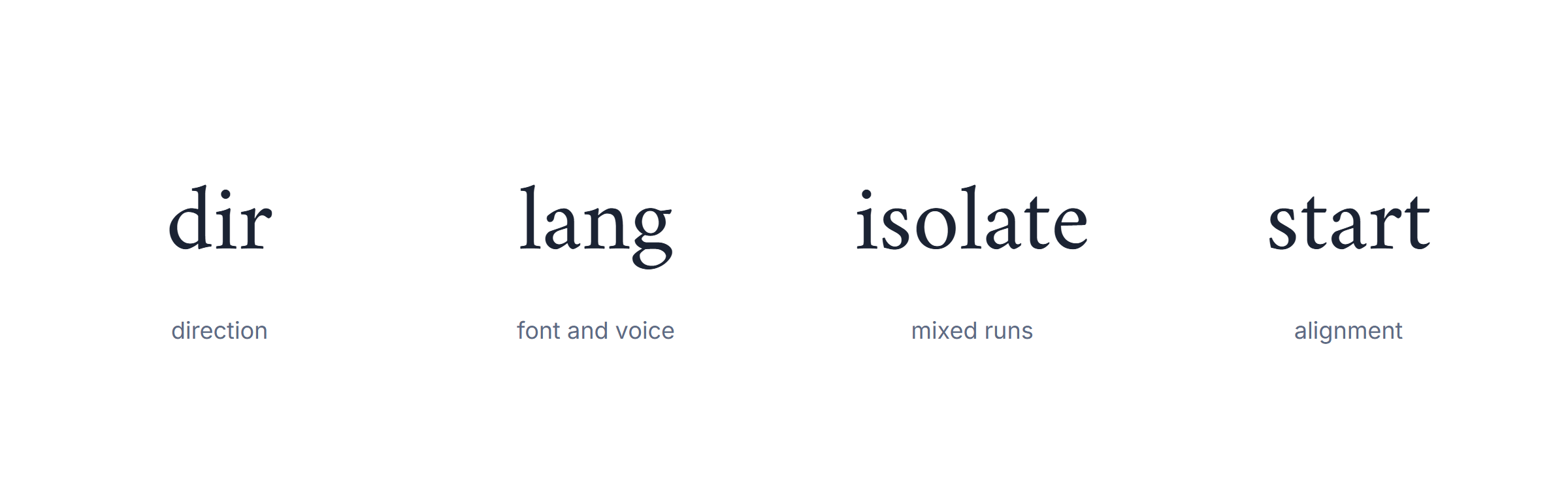
dir="rtl" | Base paragraph direction | Terminal marks at the wrong end |
lang="ar" | Font selection, hyphenation, speech | Wrong fallback font, wrong voice |
unicode-bidi: isolate | Embedded Latin runs | Brand names drag punctuation with them |
text-align: start | Alignment that follows direction | Text pinned left in an RTL block |
What is not a fix
- Changing the font. Fonts draw characters; they do not order them.
- Reversing the string. Destroys the data and only appears to work.
- Inserting RLM and LRM marks by hand. Works once, then rots the moment the text is edited.
- Using CSS
directionwithoutdir. Styles the box but leaves the document semantics wrong for screen readers and for copy-paste.
Which tools get Arabic punctuation right
| Tool | Mirrored marks | Bidi | Watch out for |
|---|---|---|---|
| Browsers | Correct | Correct with dir | Silent failure without dir |
| Microsoft Word | Correct | Correct | Autocorrect swapping in Latin marks |
| Google Docs | Correct | Correct | Paragraph direction resets on paste |
| InDesign | Correct | Needs World-Ready | Standard composer breaks joining too |
| Plain-text editors | Correct | Varies wildly | Terminal emulators are the worst case |
| PDF generators | Varies | Often wrong | Non-shaping libraries drop marks entirely |
| Spreadsheets | Correct | Per-cell | Number cells force LTR and move the marks |
The two-minute test for any tool
- Type an Arabic sentence ending in a question mark. The mark must appear at the left end.
- Add an English word in the middle. The mark must stay where it was.
What each outcome tells you:
- Both pass — the tool handles Arabic punctuation correctly.
- First fails — no base direction is being set at all.
- Second fails — runs are not being isolated. By far the more common defect.
A short glossary
- Bidi — bidirectional. The algorithm that decides where each character is drawn when a line mixes directions.
- Logical order — the order characters are stored and spoken, as opposed to the order they appear on screen.
- Neutral character — one with no direction of its own. Almost all Arabic punctuation is neutral, which is exactly why it moves.
- Isolate — a way of telling the algorithm that a run should be laid out independently of its surroundings.
- Tatweel or kashida — U+0640, the stretching character. Not punctuation.
- Harakat — the short-vowel diacritics. Not punctuation either.
- Ta marbuta — the feminine ending. Frequently mistaken for punctuation by text-processing code because of its two dots.
- Basmala — U+FDFD, a single character holding an entire formula.
The marks that flip, in one table each way
Two tables settle almost every question about which Arabic punctuation mark to reach for.
| You want to | Use | Not |
|---|---|---|
| Separate list items | ، U+060C | , U+002C |
| Join two clauses | ؛ U+061B | ; U+003B |
| Ask a question | ؟ U+061F | ? U+003F |
| End a sentence | . U+002E | ۔ U+06D4, which is Urdu |
| Introduce a quotation | : U+003A | Nothing else |
| Quote a title | « » | Curly English quotes |
| Show a decimal | ٫ U+066B with eastern digits | Mixing systems |
| Stretch a word | Nothing; adjust the font | U+0640 tatweel |
| Symptom | Cause | Fix |
|---|---|---|
| Question mark at the right end | No base direction | dir="rtl" |
| Comma sits low | Latin comma | Replace with U+060C |
| Brackets face outward | Typed backwards to compensate | Type in logical order |
| Search misses a word | Tatweel or harakat in the string | Normalise before indexing |
| Date reads reversed | Un-isolated digit run | Wrap in <bdi> |
| Heading ends in a colon | Untouched translation | Delete it |
When in doubt, three questions
- Is the mark asymmetrical? Then Arabic has its own character for it.
- Is the problem where the mark sits rather than which mark it is? Then it is bidi.
- Is the mark on a letter rather than between words? Then it is not punctuation at all.

Regional practice, country by country
| Region | Digits | Quotes | Comma | Notes |
|---|---|---|---|---|
| Egypt | Eastern and western | « » | Arabic | Press style is well established |
| Gulf | Eastern preferred | « » | Arabic | Official documents lean eastern |
| Levant | Western common | « » | Arabic | French influence is visible |
| Maghreb | Western only | « » | Arabic | Eastern digits read as foreign |
| Diaspora media | Western | Mixed | Often Latin | The least consistent of all |
What travels and what does not
- The three mirrored marks travel everywhere. No region disputes them.
- Digits do not travel. Eastern numerals in a Moroccan document read as imported; western numerals in a Gulf official form read as informal.
- Quotation style travels. The angle pair is universal in edited prose.
If you are writing for more than one region
- Use western digits. They are read everywhere; eastern digits are not.
- Use the angle quotes.
- Use the three mirrored Arabic punctuation marks without exception.
- Avoid the semicolon unless the register is formal.
The quick reference
If you remember one thing about Arabic punctuation, make it this. Three characters cover almost all everyday Arabic punctuation, and they are the three that are not on a Latin keyboard:
- ، U+060C, the Arabic comma
- ؛ U+061B, the Arabic semicolon
- ؟ U+061F, the Arabic question mark
Everything else — full stop, colon, exclamation mark, ellipsis, brackets — you already have. Getting those three right is most of what separates Arabic text that looks edited from Arabic text that looks typed on an English keyboard.